AI and the legal profession.

AI and the Legal Profession in Thailand: Opportunities and Challenges

Artificial intelligence is transforming industries worldwide, and the legal profession is no exception. In Thailand, the adoption of AI in legal practice is accelerating — changing how law firms operate, how clients access legal services, and what skills lawyers need to stay competitive.

As a lawyer practicing in Thailand with a strong interest in technology, I find this intersection fascinating and worth examining carefully.

How AI Is Being Used in Legal Practice

AI tools are being deployed across several areas of legal work:

Document Review and Due Diligence

Reviewing thousands of documents in mergers, acquisitions, or litigation used to require armies of junior lawyers working long hours. AI-powered review tools can now analyze and categorize documents at a fraction of the time and cost. For law firms handling large transactions, this is a significant efficiency gain.

Contract Analysis

AI tools can scan contracts to identify non-standard clauses, flag deviations from standard positions, and suggest amendments. This is already being used in Thailand’s major international law firms for commercial agreements, lease reviews, and employment contracts.

Legal Research

AI-assisted legal research tools can search Thai statutes, regulations, and court decisions far faster than manual research. They can also surface relevant foreign law precedents — useful in cross-border matters where Thai law intersects with foreign legal systems.

Translation and Multilingual Work

Thailand’s legal system operates in Thai, but many clients and many counterparties are foreign. AI translation tools have dramatically improved and are increasingly reliable for initial translations, with lawyers reviewing and certifying final versions.

Predictive Analytics

Some platforms analyze court decision patterns to predict litigation outcomes. While Thai court data is less systematically digitized than in some other countries, this is an emerging area of application.

Opportunities for Thai Legal Practice

For smaller and medium-sized law firms — including those serving expatriate and international clients in Thailand — AI tools offer the ability to compete with larger firms by automating routine tasks. A solo or small-firm practitioner using AI for document drafting, research, and client communication can deliver higher-quality work more efficiently.

For clients, AI increases access to legal information. Tools that can answer basic legal questions in multiple languages can help expatriates understand their situation before consulting a lawyer, making consultations more productive.

Challenges and Risks

Accuracy and Hallucination

AI language models can confidently produce incorrect legal citations, invented case names, or wrong statutory provisions — a phenomenon known as « hallucination. » A lawyer who relies on AI-generated legal research without verification risks serious errors. Every AI output in a legal context must be verified against primary sources.

Confidentiality

Client data uploaded to AI platforms may be processed on external servers. Lawyers have strict confidentiality obligations. Using cloud-based AI tools with client data requires careful attention to data processing terms and, where applicable, compliance with Thailand’s Personal Data Protection Act (PDPA).

Unauthorized Practice and Regulation

Thailand has not yet comprehensively regulated AI use in legal practice. This creates uncertainty about accountability when AI-generated advice is wrong, and about whether AI tools providing legal information to end users are engaging in unauthorized practice of law.

Bias in AI Systems

AI systems trained on historical data can reflect and amplify historical biases. In legal contexts, this could mean biased predictions about litigation outcomes based on the parties’ characteristics rather than the merits.

The Future of Legal Practice in Thailand

AI will not replace lawyers. But lawyers who use AI effectively will outcompete those who do not. The skills that AI cannot replicate — judgment, empathy, advocacy, negotiation, and the ability to navigate complex human situations — remain the core of legal practice.

In Thailand specifically, the relationship-based nature of legal work, the importance of local knowledge, and the linguistic and cultural complexity of serving an international client base mean that human legal professionals will remain central to the practice for the foreseeable future.

For clients, the best outcome is a lawyer who combines deep human expertise with smart use of AI tools — delivering better results, faster, at a reasonable cost.

Need Legal Advice in Thailand?

Sebastien H. Brousseau is a French-speaking lawyer based in Korat (Nakhon Ratchasima), Thailand, with extensive experience helping expatriates and foreign nationals navigate Thai law. Contact us for a confidential consultation.

Website: sebastienbrousseau.com  |  ThaiLawOnline.com


Useful Legal Resources for Expats in Thailand

Estate Planning in Thailand.

Estate Planning in Thailand: A Complete Guide for Expats

Estate planning in Thailand is something most expatriates put off — but it is one of the most important legal steps you can take to protect your family and your assets. Without a properly drafted will and a coherent estate plan, the distribution of your Thai assets will be governed by Thai succession law, which may not reflect your wishes and can lead to lengthy, costly probate proceedings.

Why Estate Planning Matters for Expats in Thailand

Unlike in many Western countries, Thailand has specific rules about who inherits in the absence of a will, how assets are classified, and how the probate process works. Key reasons why foreign nationals living in Thailand need an estate plan:

  • Foreign nationals cannot own land in Thailand — they may hold usufructs, superficies, or condo units, but these rights may not pass automatically to heirs without a valid Thai will.
  • Thai probate can be slow — without a clear will and appointed executor, distributing assets can take years.
  • Your home-country will may not cover Thai assets — even a valid foreign will may face practical difficulties being recognised and executed in Thailand.
  • Blended families and unmarried partners — Thai inheritance law follows a strict hierarchy of legal heirs. Unmarried partners and stepchildren may inherit nothing without a will.

Intestate Succession in Thailand

If you die without a will in Thailand (intestate), your Thai assets pass according to Section 1629 of the Thai Civil and Commercial Code in the following order of priority:

  1. Descendants (children, grandchildren)
  2. Parents
  3. Brothers and sisters of full blood
  4. Brothers and sisters of half blood
  5. Grandparents
  6. Uncles and aunts

A surviving spouse is a statutory heir alongside the class of heirs that applies. If the deceased left children, the surviving spouse inherits equally with those children (each gets an equal share). Note: an unmarried partner — regardless of the length of the relationship — has no inheritance rights under Thai law unless named in a valid will.

Making a Will in Thailand

Thai law recognises five types of wills (Section 1656–1672 CCC):

TypeRequirementsBest For
Witnessed WillSigned by testator + 2 witnesses; all sign at the same timeMost expats
Holographic WillEntirely handwritten and signed by testator; no witnesses neededSimple estates
Public WillDeclared before a district official and 2 witnesses; recorded officiallyMaximum legal certainty
Secret WillSealed by testator, submitted to official with 2 witnessesPrivacy-sensitive estates
Oral WillDeclared orally before 2 witnesses in emergency situations onlyEmergency use only

For most expatriates, a witnessed will drafted with the help of a lawyer is the most practical and legally secure option. It should clearly identify your Thai assets, name your beneficiaries, appoint an executor, and address any specific bequests.

For detailed guidance, see our full article on making a last will in Thailand.

Inheritance Tax in Thailand

Thailand reintroduced inheritance tax in 2016 under the Inheritance Tax Act B.E. 2558. Key points:

  • Tax applies to inheritances exceeding 100 million THB from a single decedent
  • Rate: 5% for descendants and ascendants; 10% for other heirs
  • Applicable to Thai assets — including land, buildings, condominiums, securities, and deposits
  • Spouses are exempt from inheritance tax

For most expatriates with moderate Thai assets, inheritance tax will not be a concern. However, those with significant property portfolios or business interests in Thailand should factor it into their planning.

Power of Attorney (POA) in Thailand

Estate planning should also include a Power of Attorney — a legal document authorising another person to act on your behalf. In Thailand, a POA is commonly used for:

  • Managing property transactions while you are abroad
  • Handling banking, government filings, or legal proceedings
  • Making medical decisions (though Thailand’s framework for medical POA is less developed than in Western countries — see our article on living wills in Thailand)

A general POA in Thailand must be notarised and often apostilled if it will be used for Land Department transactions.

Probate in Thailand

When a person dies in Thailand with Thai assets, a probate petition must be filed with the Civil Court to appoint an executor (ผู้จัดการมรดก). The executor then has the authority to collect assets, pay debts, and distribute the estate according to the will or Thai succession law.

The probate process in Thailand can take 6 months to 2+ years depending on the complexity of the estate, any disputes among heirs, and the court’s workload. A clearly drafted will with a named executor significantly speeds up the process.

Related Articles

External resources: Thai Civil and Commercial Code (Book VI: Succession) | Thai Revenue Department — Inheritance Tax

Need Legal Advice in Thailand?

Sebastien H. Brousseau is a French-speaking lawyer based in Korat (Nakhon Ratchasima), Thailand, with extensive experience helping expatriates and foreign nationals navigate Thai law. Contact us for a confidential consultation.

Website: sebastienbrousseau.com  |  ThaiLawOnline.com


Useful Legal Resources for Expats in Thailand

Company Thailand

Setting Up a Company in Thailand: A Complete Legal Guide

Thailand remains one of Southeast Asia’s most attractive business destinations for foreign investors. Whether you are establishing a small enterprise, a regional office, or a manufacturing operation, understanding the legal framework for setting up a company in Thailand is the critical first step. This guide covers the main business structures, foreign ownership restrictions, the registration process, and ongoing compliance requirements.

Types of Business Entities in Thailand

Thai Limited Company (บริษัทจำกัด)

This is the most common structure for foreign investors. A Thai Limited Company requires a minimum of three shareholders and a Board of Directors. Key features:

  • Minimum registered capital: 1 million THB (2 million THB if employing foreign nationals requiring a work permit)
  • Limited liability for shareholders
  • Corporate tax rate: 20% on net profits (reduced rates for SMEs)
  • Registered with the Department of Business Development (DBD)

Partnership

Thailand recognises Ordinary Partnerships (unlimited liability) and Registered Ordinary Partnerships. These are less common for foreign investment due to personal liability exposure.

Representative / Regional Office

Foreign companies can establish a representative or regional office in Thailand without incorporating locally. These structures cannot generate revenue from Thai sources but are useful for marketing, coordination, or procurement activities.

Branch Office

A foreign company can operate a branch in Thailand. The branch is treated as an extension of the foreign parent and subject to Thai corporate tax on Thai-sourced income. Foreign Business Licence (FBL) requirements apply in most sectors.

Foreign Ownership Restrictions: The Foreign Business Act

The Foreign Business Act B.E. 2542 (1999) is the primary legislation governing foreign investment. It restricts foreign ownership (defined as 50%+ foreign shareholding) in three lists of business categories:

  • List 1: Absolutely prohibited to foreigners (e.g., farming, forestry, Thai media, Thai-antique trading)
  • List 2: Permitted with Cabinet approval only (e.g., domestic transport, Thai-language schools, hotels)
  • List 3: Permitted with a Foreign Business Licence from the DBD (e.g., accounting, legal services, wholesale/retail below specified capital levels)

Businesses not listed in any of the three categories can generally be 100% foreign-owned. Many manufacturing, exporting, and technology businesses fall outside the restricted lists.

Pathways to 100% Foreign Ownership

  • BOI (Board of Investment) Promotion: BOI-promoted companies may receive permission for 100% foreign ownership alongside other incentives (tax holidays, land ownership rights, etc.).
  • US-Thailand Treaty of Amity: US nationals and companies majority-owned by US citizens can engage in most business activities on an equal footing with Thai nationals.
  • Industrial Estate Authority: Certain activities in designated industrial estates may qualify for majority or full foreign ownership.

Company Registration Process (Step by Step)

  1. Reserve the company name with the DBD (online or in person). Three name options are submitted; the DBD approves or rejects within 3 days.
  2. File a Memorandum of Association (MOA): The MOA defines the company’s objectives, registered capital, and shareholder structure. This is filed with the DBD.
  3. Hold a statutory meeting: All promoters (initial shareholders) must hold a statutory meeting to approve the MOA, appoint directors, and authorise share issuance.
  4. Register the company: File the incorporation documents with the DBD. The DBD issues a company registration certificate (company registration number) within 1-3 days.
  5. Register for tax: Obtain a Tax ID (TIN) from the Revenue Department within 60 days of incorporation. Register for VAT if annual turnover is expected to exceed 1.8 million THB.
  6. Open a corporate bank account: Required for business transactions and capital verification.

Total time from name reservation to company registration: approximately 7–14 business days.

Work Permits and Visas for Foreign Directors/Employees

Foreign nationals who will work in Thailand — including as directors of a Thai company — require a Non-Immigrant B Visa and a Work Permit. Work permits are issued by the Department of Employment and require:

  • Proof of employment by a Thai-registered entity
  • Company documents (registration certificate, financial statements, shareholder list)
  • A ratio of at least 4 Thai employees per foreign work permit holder

Ongoing Compliance Requirements

After registration, Thai companies must comply with ongoing obligations:

  • Annual financial statements: Must be audited and submitted to the DBD within 5 months of the fiscal year end
  • Annual general meeting (AGM): Must be held within 4 months of the fiscal year end
  • Corporate income tax returns: Half-year (PND 51) and annual (PND 50) returns filed with the Revenue Department
  • VAT returns: Monthly (PP.30) if VAT registered
  • Social security contributions: Monthly contributions for all employees
  • Withholding tax: Deducted from payments to employees, contractors, and service providers

Related Articles

External resources: Department of Business Development (DBD) | Board of Investment (BOI) | Thai Revenue Department

Need Legal Advice in Thailand?

Sebastien H. Brousseau is a French-speaking lawyer based in Korat (Nakhon Ratchasima), Thailand, with extensive experience helping expatriates and foreign nationals navigate Thai law. Contact us for a confidential consultation.

Website: sebastienbrousseau.com  |  ThaiLawOnline.com


Useful Legal Resources for Expats in Thailand

Child custody under Thai Law

Child Custody Under Thai Law

When a marriage or relationship ends in Thailand, arrangements for the children are often the most emotionally charged and legally complex matters to resolve. Understanding how child custody under Thai law works — whether you are a Thai national, a foreign expat, or involved in an international dispute — is critical to protecting both your rights and your child’s wellbeing.

Legal Framework: Thai Civil and Commercial Code

Child custody in Thailand is governed by Book 5 of the Civil and Commercial Code (CCC), with additional provisions in the Child Protection Act B.E. 2546 (2003). The fundamental principle is that all custody decisions must serve the best interests of the child.

Parental rights in Thailand are referred to as « parental power » (อำนาจปกครอง). This includes the right and duty to care for, educate, and represent the child in legal matters, as well as to manage the child’s property.

Custody on Administrative Divorce

When couples divorce by mutual consent at the district office (Amphur), they may include a written agreement specifying:

  • Which parent has primary custody
  • Visitation schedule for the non-custodial parent
  • Financial support for the child

This agreement is recorded at the district office and has legal effect. If no agreement is recorded, both parents retain joint parental power by default, which can create complications if they later disagree.

Custody Orders from the Family Court

If parents cannot agree on custody, either parent may petition the Thai Family Court. The court considers:

  • Financial capacity: Which parent can better provide for the child’s material needs — housing, education, healthcare
  • Emotional bond: The quality and history of each parent’s relationship with the child
  • Stability: Consistency of environment, schooling, and social relationships
  • Child’s wishes: Courts increasingly consider the views of older children (typically 10+ years)
  • Any history of abuse, neglect, or domestic violence

Thai courts can award sole custody to one parent while granting visitation rights to the other, or they can award joint custody where both parents share parental responsibilities. In practice, sole custody is more common in contested cases.

Rights of Foreign Parents in Thailand

Foreign nationals have equal standing before the Thai Family Court. There is no preference for Thai parents simply because of nationality. However, foreign parents should be aware of the following practical considerations:

  • Residency: A foreign parent who cannot demonstrate long-term residence in Thailand or stable local circumstances may face challenges.
  • Language: All court proceedings are in Thai. You will need a certified interpreter and a lawyer.
  • Enforcement abroad: A Thai custody order may not be automatically enforceable in your home country. Check with a lawyer in both jurisdictions.

International Child Abduction from Thailand

Thailand acceded to the Hague Convention on the Civil Aspects of International Child Abduction in 2002. If a child is wrongfully removed from Thailand or retained abroad in violation of a Thai custody order, an application can be made to the Thai Central Authority at the Department of Special Investigation (DSI).

Conversely, if a Thai parent brings a child to Thailand from abroad in violation of a foreign custody order, the DSI can process a return request. The Convention aims to ensure the prompt return of children to their country of habitual residence.

If you believe your child has been, or is at risk of being, wrongfully removed from Thailand, consult a lawyer immediately. Courts can issue emergency orders to prevent a child from leaving Thailand (a « ne exeat » order placed on the child’s passport).

Parental Support Obligations

Regardless of which parent has custody, both parents share a legal obligation to financially support their children until the age of 20 (or until the child becomes self-supporting). The amount of child support is determined by the court based on the child’s needs and the paying parent’s financial capacity.

If the paying parent is abroad, enforcement of child support can be difficult. Thailand does not have universal reciprocal enforcement of maintenance agreements with other countries. Practical mechanisms (such as securing assets in Thailand) should be discussed with a lawyer.

Related Articles

External resources: Thai Department of Special Investigation (Hague Central Authority) | Thai Civil and Commercial Code

Need Legal Advice in Thailand?

Sebastien H. Brousseau is a French-speaking lawyer based in Korat (Nakhon Ratchasima), Thailand, with extensive experience helping expatriates and foreign nationals navigate Thai law. Contact us for a confidential consultation.

Website: sebastienbrousseau.com  |  ThaiLawOnline.com


Useful Legal Resources for Expats in Thailand

Sap Ing Sith in Thailand.

Sap Ing Sith in Thailand: Protecting Your Property Interests Without Owning Land

If you have researched property ownership in Thailand as a foreigner, you have likely encountered the frustrating reality: land ownership is effectively barred for non-Thais in most circumstances. But this does not mean foreigners are without legal protection when it comes to property. Thai law provides a category of rights — Sap Ing Sith (สิทธิเหนือพื้นที่) — that allow foreigners to have legally protected, registerable interests in property even without owning it.

This post takes a practical look at how these rights work and when to use them.

The Three Main Rights

The three primary Sap Ing Sith rights are superficies, usufruct, and the right of habitation. See our comprehensive overview in the post The Rights of Sap Ing Sith. Here, we focus on practical scenarios:

Practical Scenario 1: You Are Building on Your Thai Spouse’s Land

This is the most common scenario for foreign residents. You want to build a house on land owned by your Thai spouse. If you simply build with your own money, you have no legal protection — the house may be considered part of the land (under civil law principles) and could belong to your spouse.

The correct legal structure:

  • Register a superficies right in your name on your spouse’s land. This gives you the right to own and occupy structures you build on the land.
  • Also register a usufruct in your name for the land itself, giving you the right to use and occupy it for your lifetime or for 30 years.

With both registered, your right to occupy the property is legally protected even if the land is sold or transferred — the buyer takes subject to the registered rights.

Practical Scenario 2: You Want Lifetime Use of a Property

An elderly expat wants to live in a Thai friend’s or family member’s property for the rest of their life, without the complexity of a sale.

The correct legal structure: register a right of habitation in the elderly person’s name. This gives a personal, lifetime right to live in the property. It cannot be transferred or sublicensed, which may actually be desirable in this scenario — it ensures the right is used for its intended purpose.

Practical Scenario 3: You Want to Benefit from Agricultural or Commercial Property

A foreigner wants to benefit economically from land — perhaps rice farms or a commercial building — without owning it.

The correct legal structure: register a usufruct. A usufruct gives the holder not just the right to use the property but also to collect its fruits — meaning the income it generates. The usufructuary can lease the property to third parties (with the owner’s consent) and keep the rental income.

Duration and Renewal

All Sap Ing Sith rights have maximum durations under Thai law:

  • Superficies: Maximum 30 years. Can be renewed but renewal requires re-registration.
  • Usufruct: Maximum 30 years or for the life of the holder, whichever is shorter.
  • Right of habitation: For the life of the holder only (cannot exceed natural lifetime).

Many lawyers recommend granting rights for 30 years initially, with a contractual commitment by the landowner to renew. While the renewal commitment is enforceable as a contract, it is not automatically reflected in the land title without re-registration.

What Registration Achieves

The critical practical point: only registered rights bind third parties. An unregistered usufruct or superficies only binds the person who granted it. If the land is sold or the landowner dies, an unregistered right may not be enforceable against the new owner or heirs.

Registration at the Land Department creates a note on the chanote (title deed) that is visible to any future purchaser. A buyer who purchases land subject to a registered usufruct takes the property with that burden — they cannot evict the usufructuary.

Conclusion

Sap Ing Sith rights, properly drafted and registered, provide genuine legal security for foreigners in Thailand’s property market. They are not substitutes for ownership — but for the purposes of occupying, enjoying, and benefiting from property over the long term, they are effective tools that Thai law explicitly provides. Always work with a qualified Thai property lawyer to ensure the documents are correctly structured and registered.

Need Legal Advice in Thailand?

Sebastien H. Brousseau is a French-speaking lawyer based in Korat (Nakhon Ratchasima), Thailand. Contact us for a confidential consultation.

Website: sebastienbrousseau.com  |  ThaiLawOnline.com


Useful Legal Resources for Expats in Thailand

One of my latest adventure in Nepal.

Adventures in Nepal: Why This Country Stays With You

There are destinations you visit, enjoy, and leave behind. And then there are places that alter something in you — that stay with you long after you return to ordinary life. For me, Nepal is firmly in the second category.

I have made the journey to Nepal more than once, drawn back by the mountains, the culture, the extraordinary physical landscapes, and — perhaps most of all — the people. This post shares what makes Nepal so special and what drew me back for another adventure.

The Mountains: Nothing Prepares You

Nepal is home to eight of the world’s fourteen 8,000-meter peaks, including Everest. But the mountains here affect you even when you are nowhere near the summit. Standing at a viewpoint at 3,000 meters, looking up at walls of rock and ice that rise another 5,000 meters above you — the scale is beyond what the human mind usually processes.

The first time you round a corner on a Himalayan trail and Machhapuchhre (Fishtail) or Annapurna South suddenly fills your entire visual field, you understand why people keep coming back to Nepal. No photograph captures it adequately.

Trekking Culture: The Teahouse World

Nepal pioneered the teahouse trekking model that is now copied across the Himalayas — a network of simple lodges along major trekking routes that allows trekkers to walk with just a day pack, sleeping and eating in local teahouses rather than carrying camping equipment.

The teahouse system means you travel slowly, staying in communities along the route, eating local food (dal bhat — the classic Nepali lentil rice plate — is both delicious and endlessly replenishing), and experiencing daily mountain life from the inside rather than as a visitor looking in.

The people who run these teahouses — predominantly Gurung, Tamang, and Sherpa communities — are among the most hospitable I have encountered anywhere. The welcome is genuine.

Kathmandu and Pokhara: Two Essential Cities

Kathmandu is chaotic, ancient, and extraordinary. The Durbar Squares, Pashupatinath temple (one of Hinduism’s holiest sites), the Buddhist stupas of Boudhanath and Swayambhunath, and the narrow alleys of Thamel create a sensory overload that is unlike any other city in Asia. Walk slowly and let it unfold.

Pokhara is the calm to Kathmandu’s storm — a lakeside city framed by the Annapurna massif. It serves as the base for most Annapurna-region treks and has developed an excellent tourist infrastructure while retaining a relaxed, unhurried atmosphere. Sunrise over the lake with the mountains reflected in the water is one of Asia’s finest images.

The Mardi Himal Trek: My Recommendation

If you have one trekking opportunity in Nepal, consider the Mardi Himal trek. It is less well-known than the Annapurna Circuit or Base Camp trek, which means you walk through extraordinary Himalayan landscapes with far fewer fellow trekkers. The ridge views of Machhapuchhre and the Annapurna massif from the High Camp are as good as anything I have seen in the mountains.

Practical Notes

  • Visa: Most nationalities can obtain a tourist visa on arrival at Tribhuvan International Airport in Kathmandu. Multi-entry 30-day and 90-day options are available.
  • Best seasons: October-November (autumn) and March-May (spring) offer the best trekking conditions. Avoid the monsoon season (June-September) for trekking.
  • Getting there: From Thailand, direct or one-stop flights connect Bangkok to Kathmandu in approximately 3-4 hours. Thai Airways, Thai Lion Air, and various regional carriers serve this route.
  • Altitude awareness: Acclimatize properly. Kathmandu is at 1,400m; most treks go significantly higher. Move slowly, stay hydrated, descend immediately if you feel seriously unwell.

Conclusion

Nepal is not the easiest destination — it requires some planning, physical preparation, and tolerance for the occasional power outage or road delay. But the rewards are exceptional. The mountains, the culture, the food, and the warmth of the Nepali people make it one of the world’s genuinely life-changing travel experiences. Go if you have the chance.


Useful Legal Resources for Expats in Thailand

My favorite Thai restaurant in Korat : Ton Serbiang

Ton Serbiang: My Favorite Thai Restaurant in Korat

After many years living in Nakhon Ratchasima, I have eaten at hundreds of restaurants in the city. Korat has a remarkable food scene — from outstanding street food to modern fusion — but if someone asks me where to go for the best traditional Thai food in a beautiful setting, I always say the same name: Ton Serbiang.

Where Is Ton Serbiang?

Ton Serbiang is located in Nakhon Ratchasima, accessible from the city center. The restaurant is set in a traditional Thai wooden structure surrounded by lush gardens — a stark, welcome contrast to the concrete commercial zones that characterize much of modern Korat. As soon as you turn off the main road and enter the grounds, you feel the atmosphere shift.

Finding it is part of the adventure for first-time visitors. It is not in a shopping mall or on a major commercial strip — it sits slightly off the beaten path, which is part of what keeps the atmosphere so authentic.

The Atmosphere

The restaurant is built in traditional Thai architecture with wooden pavilions, open-air dining areas, and a garden setting with mature trees. It feels more like a traditional Thai compound than a commercial restaurant. In the evening, the lighting adds warmth to the wood and greenery.

Service is attentive and friendly without being intrusive. The staff are patient with foreign customers who may need help with the Thai menu, though pointing at neighboring tables’ dishes works perfectly well.

The Food

This is where Ton Serbiang truly distinguishes itself. The cooking is traditional Thai — not adapted for tourist palates, not fusion, not international. It is the food that Thais actually eat and celebrate.

Standout dishes:

  • Tom Yum Goong: The benchmark dish for any Thai restaurant — here it is deeply aromatic, with plump prawns, galangal, lemongrass, and kaffir lime leaves, properly sour and spicy.
  • Pad Thai: Classic, well-executed, with good wok breath and quality ingredients.
  • Som Tam: The Isaan version — pungent, sour, spicy — made to order and properly intense.
  • Gai yang (grilled chicken): Marinated in lemongrass and galangal, served with a sticky rice basket and a tamarind-based dipping sauce.
  • Fresh seafood: The restaurant does excellent seafood dishes when fresh catch is available.

Portions are generous and prices are reasonable by any standard — this is not a tourist-priced establishment.

Best Time to Visit

Ton Serbiang is excellent any time, but particularly beautiful in the evening when the garden is lit. It is also a popular venue for family gatherings and celebrations — if you want a quieter experience, weekday lunches are ideal. Weekend evenings can be busy with Thai families, which is always a good sign about the quality of the food.

Tips for Visiting

  • Come with a group if possible — Thai food is designed for sharing and the table is better with more dishes.
  • Ask the staff for their recommendations — they are proud of their kitchen and happy to guide you.
  • If you read Thai or have a phone with translation, the full Thai menu has more options than any English version.
  • Book ahead for large groups, especially on weekends.

Korat’s Food Scene More Broadly

Ton Serbiang is one highlight of Korat’s remarkable food culture. The city is a gateway to Isaan cuisine — some of the most complex and exciting food in Thailand. From hole-in-the-wall noodle shops to night markets, Korat rewards food exploration. See more of our restaurant reviews on this site for a broader guide to eating well in the city.

Conclusion

If you are in Korat and want one meal that represents Thai food at its best — traditional, honest, beautifully presented, in a setting that is itself worth the visit — Ton Serbiang is my unconditional recommendation. It is not fancy in a Western hotel sense; it is something better: authentically Thai.

About This Place

Thai Restaurant Dining in Korat. Korat has numerous excellent Thai restaurants serving authentic Isan (northeastern) and central Thai cuisine, perfect for both locals and expatriates. Popular spot for locals and expatriates in the region.

Have questions about living or working in Thailand? Contact Sebastien Brousseau – French-speaking lawyer based in Korat (Nakhon Ratchasima).


Useful Legal Resources for Expats in Thailand

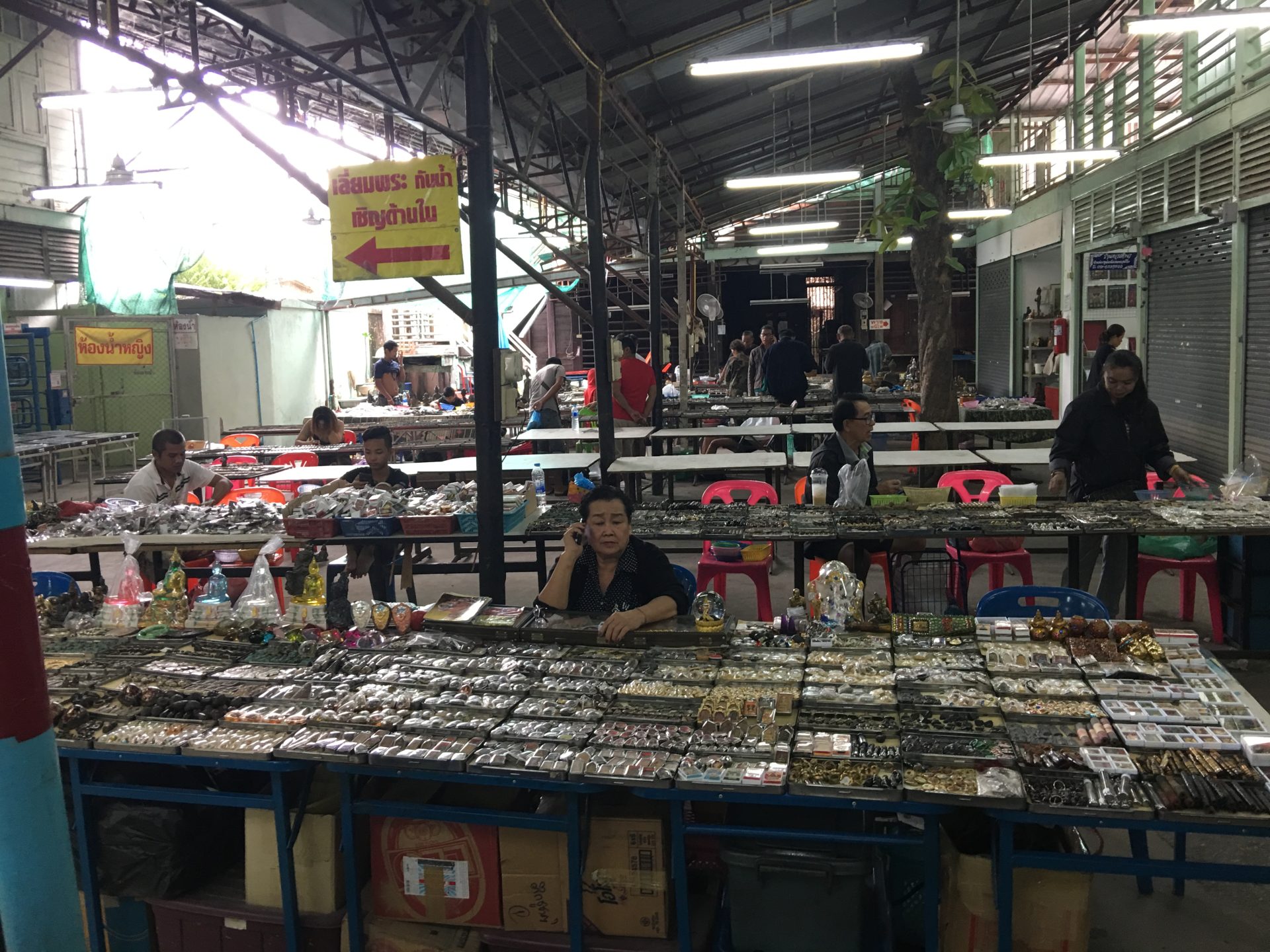
ตลาดพระเครื่องในโคราช

ตลาดแห่งนี้อยู่ใกล้กับ à¸¢à¹ˆà¸²à¹‚ม (อนุสาวรีย์ท้าวสุรนารีย์),อยู่ในใจกลางเมืองโคราช ติดกับ 7-eleven อยู่ใต้โรงแรมที่สวยงามซึ่งเป็นโรงแรมเก่าสร้างด้วยไม้ เป็นหนึ่งในตัวอย่างของตึกไม้เก่าที่อยู่ในพื้นที่แถวนั้น

ช่วงกลางคืน จนถึงดึก โดยเฉพาะช่วงดึกๆหลังจากบาร์ปิดแล้ว คนจะชอบมานั่งกินข้าวต่อที่ร้านอาหารที่อยู่ติดกับตลาดพระเครื่องแห่งนี้ à¸Šà¹ˆà¸§à¸‡à¸à¸¥à¸²à¸‡à¸§à¸±à¸™ à¸—ุกวันตลาดพระเครื่องเปิดให้บริการ

พระเครื่องเป็นสิ่งศักดิ์สิทธิ์ ที่ทำขึ้นเพื่อบูชา และป้องกันภัยอันตรายจากสิ่งเลวร้ายทั้งปวง ซึ่งเป็นที่นิยมและเป็นที่เคารพสำหรับคนไทย  ทั่วทั้งประเทศไทย ถ้ามีแขวนไว้ที่คอก็จะทำให้คุณโชคดีและป้องป้องคุ้มครองคุณ

คนไทยจะเชื่อในสิ่งศักดิ์สิทธิ์ ปฎิหาร ทำให้คุณรวยขึ้น มีแฟนดี ป้องกันอุบัติเหตุแอ่นๆ ซึ่งคุณจะเห็นบ่อยๆในรถของคนไทยที่มีพระเครื่องแขวนอยู่

พระเครื่องมีหลายรุ่น หลายชุดด้วยกัน ราคาจะถูกจะแพงขึ้นอยู่กับวัตุดิบ และรุ่นที่ซื้อ ยิ่งเก่ายิ่งมีราคาแพง ซึ่งถ้าเป็นของแท้ยิ่งมีราคาแพง

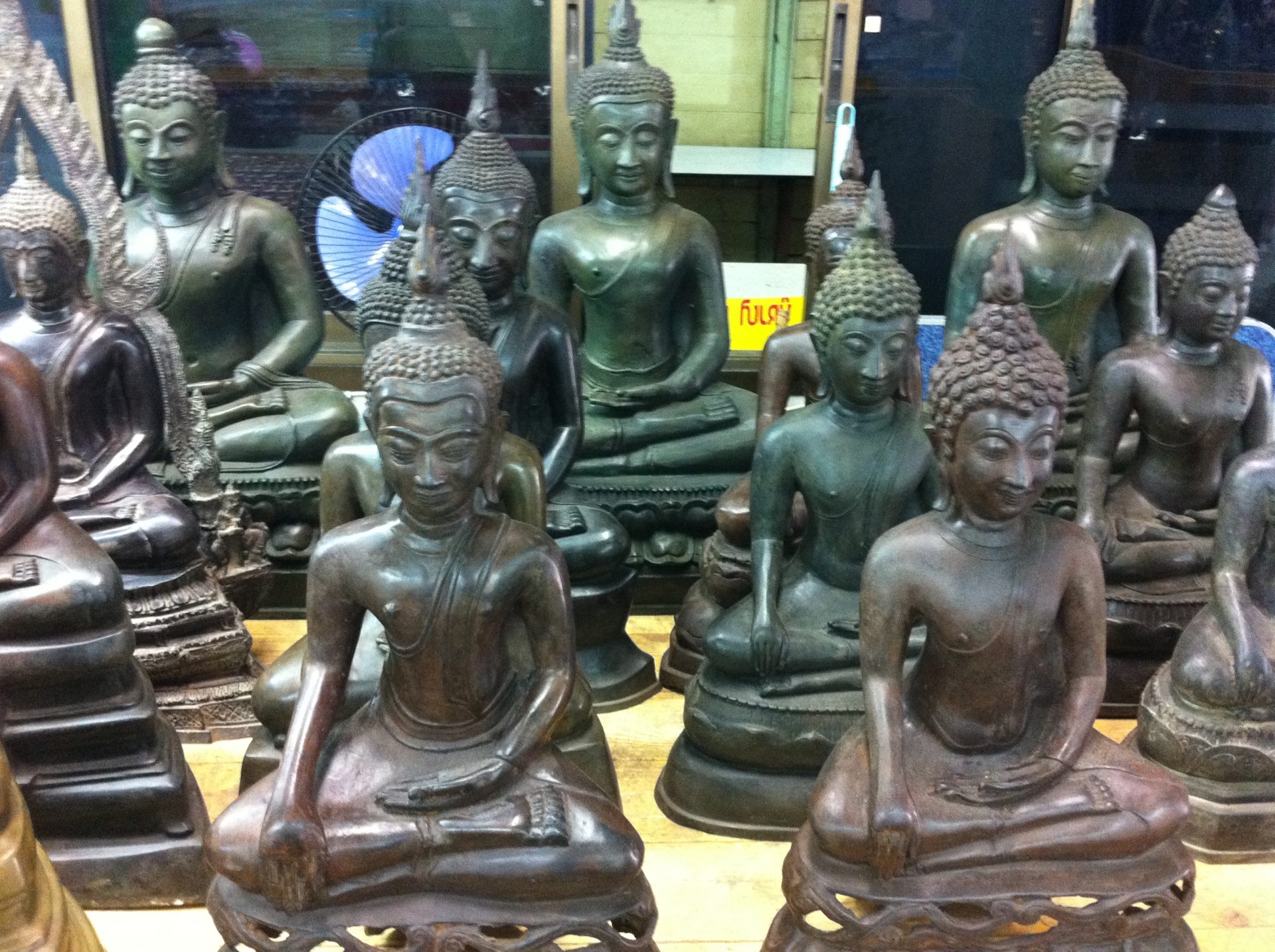
นี่เป็นพระเครื่องที่ทางร้านเอามาให้เราได้ดู สวยมากก

พระเครื่องรุ่นที่มีราคาแพง จะเก็บอยู่ในตู้และล็อกไว้ เป็นอย่างดี และเป็นพระเครื่องที่มีการปลุกเสกเรียบร้อยแล้ว

จะมีพระเครื่องให้คุณได้เลือกมากมาย แต่ต้องระวังถ้าคุณไม่ใช่คนที่เล่นพระเครืองหรือดูไม่เป็น อาจจะซื้อในราคาที่แพงเกินไปก็ได้

ตลาดแห่งนี้มีขนาดค่อนข้างใหญ่ แต่รูปนี้ถ่ายเมื่อวันอาทิตย์ ตอนบ่าย ซึ่งวันที่ถ่ายนั้นเป็นวันที่ค่อนข้างเงียบ à¸„ุณจะเห็นคนเยอะแยะมากมายในช่วงวันทำการ จันทร์-ศุกร์ ระหว่าง 10.00- 16.00 น.

บางครั้งคุณอาจจะเห็นร้านที่ตั้งอยู่ตามถนน à¹à¸¥à¸°à¸¢à¸±à¸‡à¸¡à¸µà¸‚ายพระเครื่องอยู่ที่ à¸•ลาดนัดเซฟวัน à¹à¸¥à¸°à¸„ุณยังสามารถหาดูได้ที่  à¸„ลังพลาซาร์ใหม่, จะอยู่บนชั้นสุดท้าย (ถัดจากชั้นที่ขายคอมพิวเตอร์และโทรศัพท์มือถือ)

ลิ้งค์:


Useful Legal Resources for Expats in Thailand

Amulets Market in Korat – Religious Market

Discover the unique world of amulets and religious items at the market near Ya Mo statue in Korat. Find out how these objects bring luck and protection! #AmuletsMarket #Korat #ReligiousItems

This market is located near Ya Mo statue (Thao Suranaree monument), in the center of the city, just beside the 7-eleven. It’s under a beautiful old hotel in wood, one of the rare example of old buildings in this area.

At night, very late, it’s a popular restaurants for people after the bars close. On day time, 7 days a week, it’s an amulet and religious items markets.

Amulets are religious things made in order to protect you from trouble. They are very popular among Thai people, especially in the South. If you have them in a necklace, it should be an odd number, like 3, 5, 7 for better luck.

Believing that it brings luck, health, fortune…

Thai people believe that these objects can make them richer, or make them find a good partner, avoid a car accident, etc. This is why you often see them in cars…

Some other religious items are also sold, like statues, in wood, bronze, clay, etc. Their price can be very cheap to very expensive, depending on material, if it’s an original or not, the quality of the work, the age of the item, etc. They will often say: ‘This one is from Ayutthaya….’ as this was the capital of Thailand in the past and objects from Ayutthaya are praised with Thais. Some people can imitate and copy objects that looks old…but they are brand new. You have to pay attention to each details if you want to buy an object of a certain value.

Some artists are working in the market. More expensive objects will be kept in secure places. Some buddhas can worth a lot of money…just like any piece of art in the world. However, here, they also have a religious connotation.

If you buy a buddha and put it in your house, it should be at a high level. Buddha should always be higher then you. It’s a belief and a tradition.

Differents Kind of Objects at the Amulets Market in Korat

You might also find jade objects. Again be careful, jade can be very cheap or very expensive. Avoid buying if you don’t know how it worths. Jade price is connected with the color of the jade, is purity (if it has cracks or other colors in it), if it’s bright or mat, and much more.

This market is quite large but these pictures were taken on a Sunday afternoon, 2 weeks ago. Sunday is the quiet day. You can see a lot of activity in the week days. We suggest you to visit in on week day (Monday to Friday) between 10 am to 4pm.

You will see some stands also on the street. They also sell amulets in a section of saveone market.

Links:


Useful Legal Resources for Expats in Thailand

Maha Viravong Museum

Maha veravong Korat 1.JPG

The Maha Viravong National Museum (in Thai พิพิธภัณฑ มหาวีรวงศ์) is located inside the compound of Wat Sutthajinda, in Muang district, Nakhon Ratchasima. It is a temple in front of Klang Plaza 2, near the pizza company restaurant. It’s really in the heart of Korat city. About 300 meters from Yamo.

The museum is behind the King Rama 9 Commemorative library (public library). It’s a one story small museum constructed in the form of a contemporary Thai style house.

Maha veravong Korat.JPG
It is located behind a library and closed on Monday and Tuesday.

The museum was officialled opened on 24 June 1954. Most of the collection are objects from Somdej Maha Viravong, the former abbot of Wat Suthajinda and were given to the Fine Arts Department for the purpose of disseminating information about Thailand’s cultural heritage.

It is NOT a big museum. It’s basically just a room. But the objects, artifacts, sculptures are really beautiful. If you like art, Thai culture and archeology, you should pay a small visit.

Maha veravong Korat 3.JPG

All information is in Thai and English. That is quite nice…

Maha veravong Korat7.JPG

Rama 5 and Rama 9 used these chairs… in Nakhon Ratchasima.

brochure.jpg

The museum is open from Wednesday to Sunday (closed Monday-Tuesday) from 9 am to 4:30.
Admission is 50 baht for foreigners and 10 baht for Thais. (I hate dual pricing and that was few years ago. I might be higher now)

Maha veravong Korat 2.JPG

Pictures on Flickr here: https://www.flickr.com/photos/50651722@N03/sets/72157626780995193/


Useful Legal Resources for Expats in Thailand